by Robert Borges on August 14, 2026
Lake Living vs. Beach Living: Which Lifestyle Is Right for You?

For many homebuyers, living near the water is the dream. The harder question is deciding which kind of waterfront lifestyle is right for you: lake living or beach living?
Both offer beautiful scenery, outdoor recreation, boating opportunities, and a relaxed connection to the water. But day-to-day life can be surprisingly different.
Lake communities often appeal to buyers looking for peaceful surroundings, freshwater recreation, boating, fishing, and a close-knit community atmosphere. Beach communities offer ocean views, coastal recreation, saltwater activities, and easy access to the distinctive restaurants, entertainment, and culture found in many seaside destinations.
If you're comparing lake living vs. beach living for retirement or your next move, factors such as cost, maintenance, weather, recreation, and community atmosphere can help you decide.
In this article, we’ll explore:
Is Lake Living or Beach Living More Affordable?
Which Requires More Home Maintenance?
How Do Weather and Natural Hazards Compare?
Which Is Better for Boating?
Which Is Better for Fishing and Water Recreation?
Which Offers a Better Outdoor Lifestyle?
Which is Better for Retirement?
What Are the Pros and Cons of Lake and Beach Living?
Frequently Asked Questions
Explore Lake and Coastal Communities
Lake Living vs. Beach Living At-A-Glance
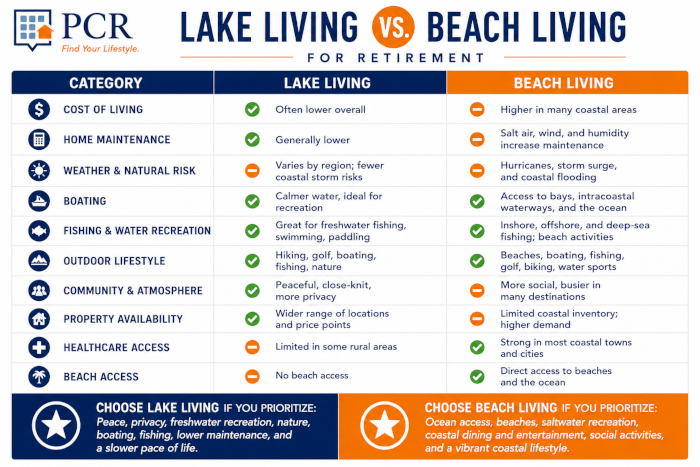
Is Lake Living or Beach Living More Affordable?
One of the first questions buyers ask when comparing a lake house vs. beach house is which costs less.
There isn't a universal answer because waterfront real estate varies tremendously by destination. A luxury home on Lake Tahoe or Lake Oconee can cost considerably more than a home near the beach in a less expensive coastal market. Likewise, oceanfront homes in prestigious beach destinations can command significant premiums.
However, lake living can give buyers a broader range of locations and price points.
Lakes are found throughout the country, including many inland areas with relatively affordable real estate. Buyers can explore lake communities in Tennessee, Georgia, North Carolina, South Carolina, Arkansas, Alabama, Texas, and many other states.
Beach living is geographically more limited. Desirable coastal real estate may carry premiums because of limited supply and strong demand. Ultimately, affordable homes can be found in both lakefront communities and coastal communities near the beach.
But the purchase price is only part of the equation.
Prospective waterfront buyers should also compare:
- Homeowners insurance
- Flood insurance
- Property taxes
- HOA or community fees
- Dock and seawall maintenance
- Exterior home maintenance
- Landscaping
- Boat storage or marina fees
- Utilities
- Local cost of living
Waterfront homes themselves can also come with specialized maintenance and insurance considerations, so buyers should evaluate the total cost of ownership rather than simply comparing listing prices.
Bottom Line:
Lake living may offer more opportunities to find an affordable waterfront lifestyle, particularly for buyers willing to consider inland markets. Beach living ranges from surprisingly attainable to extremely expensive depending on the destination, but highly desirable coastal and oceanfront locations often command a premium.
Which Requires More Home Maintenance: Lake or Beach Living?
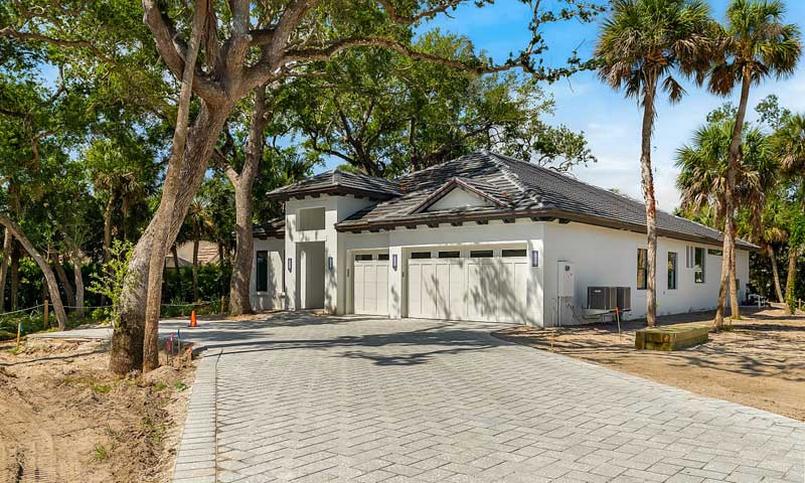
This is one of the practical differences buyers shouldn't overlook.
Any waterfront property may require additional maintenance because of moisture, erosion, docks, seawalls, drainage, and exposure to the elements.
Beach homes introduce another factor: salt.
Salt air can accelerate corrosion and wear on metal fixtures, outdoor furniture, vehicles, HVAC equipment, windows, railings, and other exterior components. Wind-driven sand and coastal humidity can add to maintenance requirements as well.
Lakefront properties have their own considerations.
Depending on the property, homeowners may need to maintain:
- Private docks
- Boat lifts
- Seawalls
- Shorelines
- Drainage systems
- Waterfront landscaping
Buyers should also investigate who owns and manages the lake, water-level policies, dock regulations, shoreline restrictions, and HOA or community rules before purchasing.
Bottom Line:
Lake living generally has the advantage for lower routine maintenance, although waterfront ownership of either type requires extra planning. Beach homeowners should be particularly prepared for the effects of salt, wind, humidity, and coastal weather.
How Do Weather and Natural Hazards Compare?
Weather risk varies dramatically depending on where you live.
Beach communities along the Atlantic and Gulf coasts may face hurricanes, tropical storms, storm surge, flooding, erosion, and high winds. Those risks can affect everything from insurance costs to building requirements.
Lake communities aren't immune to weather hazards.
Depending on the region, lake homeowners could encounter:
- Flooding
- Severe thunderstorms
- Tornadoes
- Wildfires
- Winter storms
- Drought and changing water levels
A lake in North Carolina, for example, presents a very different climate profile from one in Michigan or Arizona.
Likewise, "beach living" can mean anything from Florida's Gulf Coast to coastal North Carolina, Delaware, California, or the Pacific Northwest.
That's why buyers should evaluate the specific property and region rather than assuming all waterfront homes carry the same risks.
Bottom Line:
Lake living often has lower exposure to coastal storms, but location matters enormously. Beach buyers should pay particularly close attention to flood zones, hurricane exposure, insurance availability, evacuation routes, and construction standards.
Which Is Better for Boating?
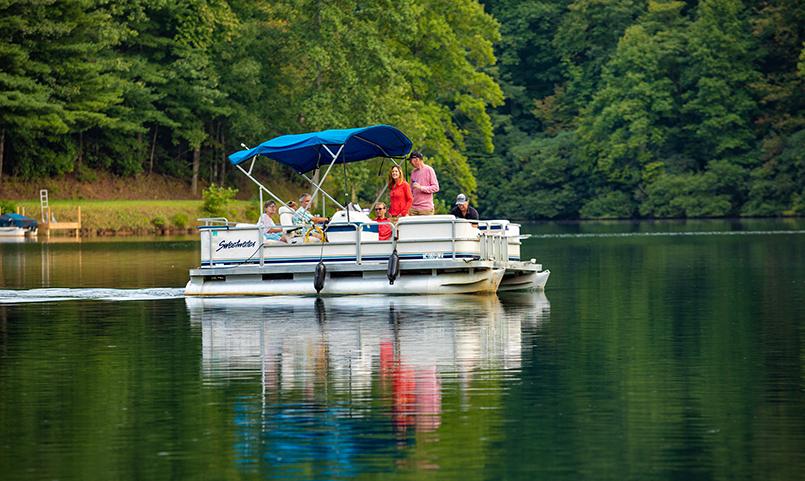
This one is essentially a tie — but the experiences couldn't be more different.
Lake Boating
Lake communities can offer an exceptionally convenient boating lifestyle.
Depending on the lake, residents may enjoy:
- Pontoon boating
- Sailing
- Water skiing
- Wakeboarding
- Kayaking
- Canoeing
- Paddleboarding
- Fishing
- Sunset cruises
Some master-planned lake communities feature private marinas, community boat ramps, docks, boat storage, and waterfront club facilities.
Protected freshwater can also appeal to recreational boaters who prefer calmer conditions.
However, not every lake allows every type of boat. Some communities restrict motor sizes, personal watercraft, wake boats, or certain water sports.
Coastal Boating
Beach and coastal communities open the door to an entirely different boating experience.
Depending on the location, residents may have access to:
- Bays
- Intracoastal waterways
- Rivers and estuaries
- The open ocean
- Barrier islands
- Offshore fishing
- Sailing
- Cruising
For serious boaters, coastal living can provide nearly limitless opportunities to explore.
The tradeoff is that tides, currents, weather, saltwater maintenance, marina availability, and boating experience become more important.
Bottom Line:
Lake living is especially attractive for relaxed recreational boating and easy days on calmer water. Coastal living has the advantage for buyers who want access to larger waterways, offshore boating, sailing, and ocean adventures.
Which Is Better for Fishing and Water Recreation?
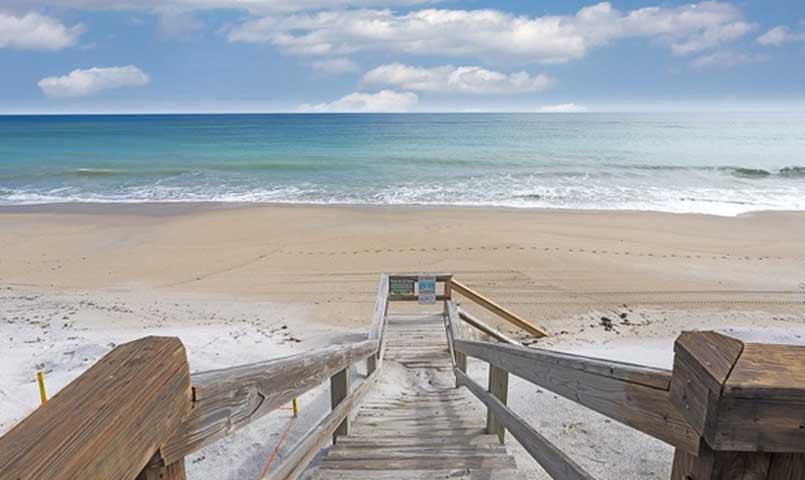
If spending your retirement with a fishing rod in your hand sounds ideal, you can't really lose.
The question is what you want to catch — and how you want to spend your time on the water.
Lake Living
Freshwater lakes can offer:
- Bass fishing
- Trout fishing
- Crappie fishing
- Catfish
- Swimming
- Kayaking
- Paddleboarding
- Water skiing
- Wakeboarding
The calmer environment of many lakes also makes it easy to combine several activities in one day.
You might fish early in the morning, paddleboard after breakfast, play golf in the afternoon, and take the pontoon boat out for sunset.
Beach Living
Coastal destinations can offer:
- Surf fishing
- Inshore fishing
- Offshore fishing
- Deep-sea fishing
- Surfing
- Paddleboarding
- Kayaking
- Sailing
- Swimming
- Snorkeling in appropriate destinations
Beach living also provides something a lake can't fully replicate: miles of shoreline for walking, relaxing, shelling, and simply watching the ocean.
Bottom Line:
Lake living has an edge for easy-access freshwater recreation and calmer-water activities. Beach living wins for the sheer variety and scale of saltwater recreation.
Which Offers a Better Outdoor Lifestyle?
This might be the hardest category to call.
Lake communities frequently combine water recreation with other outdoor amenities.
Many are located near:
- Mountains
- Hiking trails
- State parks
- Forests
- Golf courses
- Bike trails
- Nature preserves
That's one reason lake destinations can be particularly appealing to active retirees. Recent coverage of retirement-oriented lake towns highlights combinations of boating, fishing, hiking, golfing, cultural amenities, and access to nearby cities rather than water alone.
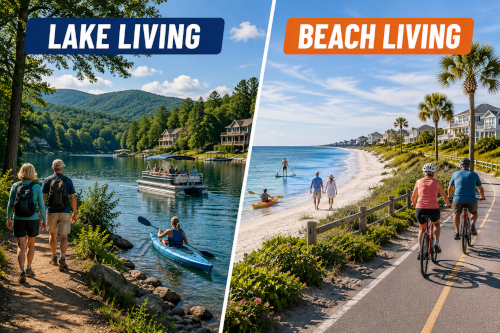
Beach communities offer their own exceptional outdoor lifestyle centered around the coast.
Residents may spend their days:
- Walking the beach
- Biking
- Boating
- Fishing
- Kayaking
- Paddleboarding
- Golfing
- Playing tennis or pickleball
- Exploring coastal parks and nature preserves
The biggest difference is the setting.
Lake life often feels wooded, peaceful, and immersed in nature.
Beach life often feels open, breezy, social, and distinctly coastal.
Bottom Line:
This one is a tie. Choose the lake if your ideal morning involves coffee on the dock overlooking calm water and wooded hills. Choose the beach if you'd rather start the day walking along the shoreline with an ocean breeze.
Is Lake Living or Beach Living Better for Retirement?
Both can be outstanding choices for retirement.
In fact, lake towns are increasingly highlighted as year-round retirement destinations because they can combine water recreation with golf, restaurants, culture, and access to everyday services.
But retirement changes the equation.
A vacation destination doesn't automatically make a great place to live full-time.
Before buying, consider:
- Healthcare access
- Grocery stores and everyday services
- Airport proximity
- Year-round population
- Seasonal traffic
- Climate
- Insurance
- Taxes
- HOA fees
- Home maintenance
- Social opportunities
- Clubs and activities
- Golf and recreation
- Accessibility as you age
A beautiful view matters.
But the best retirement destination needs to work on an ordinary Tuesday in February just as well as it does during a summer vacation.
Bottom Line:
Lake living may be especially attractive to retirees prioritizing peace, nature, boating, and a slower pace. Beach living may appeal more to retirees who want coastal recreation, restaurants, social activity, and the energy of a seaside destination.

Lake Living vs. Beach Living: Pros and Cons
Pros of Lake Living
Lake living can be an excellent fit for retirees and active adults who want a quieter waterfront lifestyle with easy access to nature.
Advantages may include:
- Peaceful surroundings
- Freshwater boating and fishing
- Calmer water for kayaking and paddleboarding
- Greater privacy in many communities
- Access to hiking, golf, and nature
- More inland location options
- Often lower maintenance than saltwater environments
- Strong sense of community in many lake developments
Potential Drawbacks
Lake living also comes with a few considerations:
- Some lakes have boating restrictions
- Water levels may fluctuate
- Certain communities can feel remote
- Fewer dining and entertainment options in rural areas
- Dock and shoreline maintenance may be required
- Seasonal weather varies greatly by region
Pros of Beach Living
Beach living offers a distinctive lifestyle that many retirees dream about for years before making a move.
Advantages may include:
- Ocean views and beach access
- Saltwater boating and fishing
- Coastal dining and entertainment
- Long walking beaches
- Water sports and outdoor recreation
- Resort-style communities
- Strong social atmosphere in many destinations
- Easy access to marinas and coastal waterways
Potential Drawbacks
Beach living may require more planning and maintenance.
Considerations include:
- Higher insurance costs in some coastal markets
- Hurricane and storm exposure
- Salt-related wear and corrosion
- Seasonal crowds
- Traffic in popular resort destinations
- Higher home prices in many desirable beachfront markets
Which Waterfront Lifestyle Fits You?
The decision between lake living and beach living often comes down to the atmosphere you want around you every day.
Choose Lake Living If...
Lake living may be right for you if you want:
- A peaceful setting
- Freshwater boating and fishing
- A slower pace of life
- More privacy
- Forests, hills, or mountain scenery
- Easy access to hiking and nature
- Calmer water
- A close-knit community feel
- Lower exposure to coastal storms
Lake communities can be especially appealing to retirees who want to stay active without feeling surrounded by tourism or heavy seasonal traffic.
Choose Beach Living If...
Beach living may be the better fit if you want:
- Ocean views
- Beach walks
- Saltwater boating
- Offshore or inshore fishing
- Coastal restaurants and entertainment
- A more social environment
- Resort-style amenities
- Warmer coastal weather
- Easy access to marinas and waterfront activities
Beach communities are often ideal for retirees who want an active coastal lifestyle with plenty to do both on and off the water.
Frequently Asked Questions
Is lake living cheaper than beach living?
In many areas, yes. Lake communities can offer a wider range of price points because they are located throughout the country, including many inland markets. Beachfront and coastal real estate may carry higher premiums because of limited supply and strong demand.
Is a lake house easier to maintain than a beach house?
Generally, yes. Beach homes often require more maintenance because salt air, wind, humidity, and sand can accelerate wear on exterior materials, HVAC equipment, vehicles, and outdoor fixtures.
Is lake living safer than beach living?
Lake communities typically have less exposure to hurricanes and storm surge, but they may still face flooding, severe storms, wildfire, drought, or winter weather depending on location. Buyers should evaluate risks specific to the property and region.
Is lake living better for retirees?
Lake living can be an excellent choice for retirees who value peace, boating, fishing, nature, and a slower pace of life. Beach living may be better for retirees who want coastal recreation, dining, entertainment, and a more active social environment.
Which is better for boating: a lake or the ocean?
Both can be excellent. Lakes often provide calmer and more predictable conditions for recreational boating, while coastal living offers access to larger waterways, offshore fishing, sailing, and longer-distance cruising.
Ready to Compare Waterfront Communities?
Once you've decided which waterfront lifestyle feels more like you, the next step is finding the community that fits your needs.
For more than 30 years, Private Communities Registry (PCR) has helped homebuyers discover lifestyle communities throughout the country.
Whether you're looking for a peaceful lake community, a coastal golf neighborhood, a waterfront active adult community, or a master-planned development with marina access, PCR makes it easy to compare communities by location, amenities, lifestyle, and home type.
Explore Lake Communities
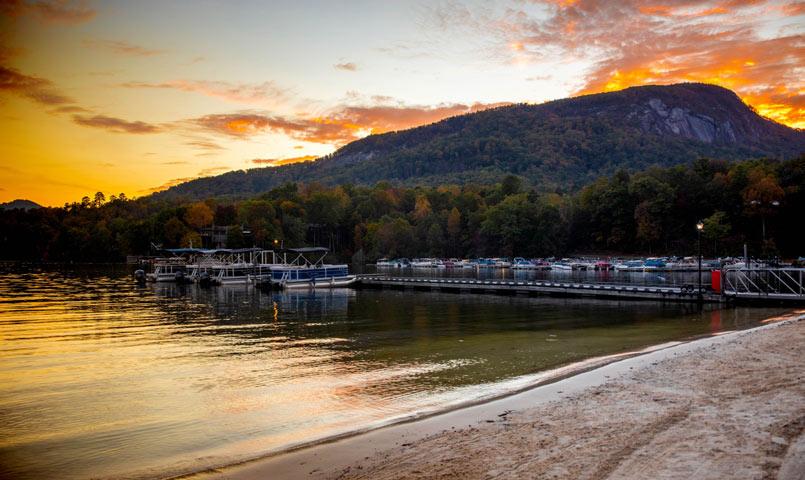
Discover lake communities offering boating, fishing, golf, walking trails, mountain scenery, and waterfront living.
Explore Coastal and Beach Communities
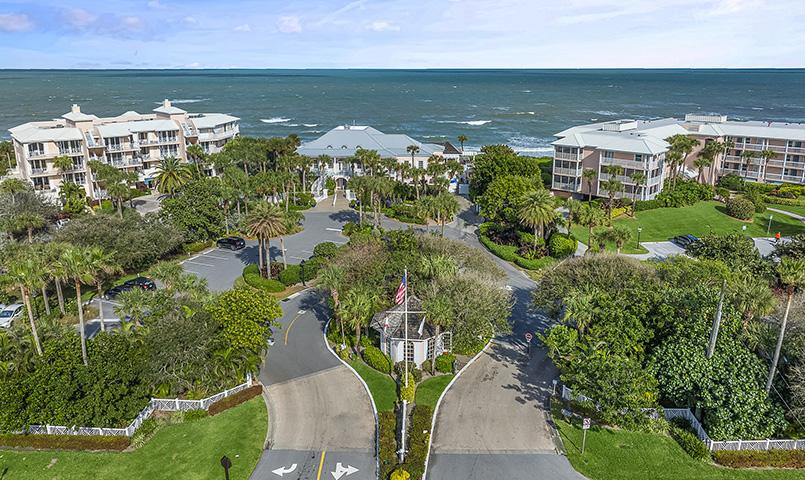
Browse coastal oceanfront communities featuring beaches, boating, marina access, golf, resort-style amenities, and beachfront living.
Still deciding?
Compare communities side by side, request information directly from developers, and discover which waterfront lifestyle best fits your retirement goals.
Sources & Further Reading
For additional information on waterfront living, insurance, recreation, and retirement destinations, these resources can help:
- FEMA – Flood maps, coastal hazards, and disaster risk information
https://www.fema.gov/ - National Flood Insurance Program – Flood insurance guidance for waterfront homeowners
https://www.floodsmart.gov/ - NOAA – Coastal weather, tides, storms, and marine conditions
https://www.noaa.gov/ - U.S. Army Corps of Engineers – Lake management and reservoir information
https://www.usace.army.mil/ - Medicare Care Compare – Compare hospitals and healthcare providers near potential retirement destinations
https://www.medicare.gov/care-compare/ - U.S. Census Bureau – Population and migration trends in retirement destinations
https://www.census.gov/
About the Author
With over 20 years of experience as a seasoned content creator, Robert Borges is the senior writer for Private Communities Registry (PCR), specializing in real estate trends and master-planned communities. He works closely with builders, developers, and real estate pros to create helpful content that guides homebuyers in finding the perfect community, ensuring they have the information needed to make confident, informed decisions.