by Robert Borges on October 6, 2026
Living in or Near Charlotte, NC: Best Towns, Communities & Things to Know

Thinking about living in Charlotte, NC—or somewhere close enough to enjoy the city without living right in the middle of it? You’ll have plenty of options on both sides of the North Carolina-South Carolina state line.
Charlotte has become one of the Southeast’s major destinations for relocation, combining a strong economy, big-city entertainment, professional sports, excellent air connectivity, and relatively easy access to lakes, mountains, and smaller communities. The city itself now has more than 960,000 residents, while Mecklenburg County surpassed 1.23 million in 2025.
But Charlotte is only part of the story.
From Lake Norman living in Cornelius to the small-town atmosphere of Waxhaw, established suburbs such as Matthews, growing communities around Concord and Indian Trail, and South Carolina destinations including Lancaster and Lake Wylie, the greater Charlotte area offers an impressive variety of places to call home.
Whether you’re relocating for work, planning for retirement, looking for a 55+ community, or simply ready for a lifestyle change, here’s what to know about living in and around Charlotte, North Carolina.
Quick Take: Is Charlotte a Good Place to Live?
For many people, yes. Charlotte offers an appealing middle ground between a major metropolitan area and the more relaxed lifestyle associated with the Carolinas.
Some of the region’s biggest draws include:
- A strong and diverse employment market
- Numerous suburbs and smaller towns within reach of the city
- Lake Norman and Lake Wylie recreation
- Professional sports, restaurants, arts, and entertainment
- Charlotte Douglas International Airport
- Mild winters and a long outdoor recreation season
- Master-planned, golf, active adult, gated, and lake communities
- Access to both North Carolina and South Carolina living
Charlotte is also a major employment center. Financial services remain particularly important, but the regional economy extends into technology, advanced manufacturing, logistics, distribution, and life sciences.
What Is It Like to Live in Charlotte?

Charlotte—or the Queen City—feels considerably larger and more cosmopolitan than many other cities in the Carolinas.
Uptown Charlotte is home to office towers, museums, restaurants, entertainment venues, and major sporting events. The Carolina Panthers, Charlotte Hornets, and Charlotte FC all call the city home, while NASCAR has deep roots throughout the region.
Charlotte is also a major corporate center, with companies including Bank of America, Lowe’s, and Duke Energy among the Fortune 1000 businesses headquartered in the area.
Yet you don’t have to travel far from Uptown before the landscape changes.
Tree-lined residential neighborhoods give way to suburban developments, historic downtown districts, golf courses, lakes, farmland, and smaller communities. That variety is one of the Charlotte region’s greatest strengths: you can remain connected to a major city without necessarily feeling like you live in one.
Why Are People Moving to the Charlotte Area?
Jobs and Economic Opportunity
Charlotte's economy is one of its biggest relocation drivers. While the city is especially well known for banking and financial services, the broader economy supports careers in healthcare, technology, manufacturing, logistics, energy, and other industries.
The Charlotte Regional Business Alliance estimates the broader region has approximately 3.2 million residents, giving employers access to a substantial workforce.
Easy Air Travel
For frequent travelers, Charlotte Douglas International Airport is a major advantage.
CLT is an American Airlines hub with extensive domestic and international connectivity. The City of Charlotte reports service to nearly 200 nonstop destinations, making the region particularly convenient for business travelers, retirees who travel frequently, and residents with family scattered around the country.
Outdoor Recreation
Living near Charlotte puts several distinctly different outdoor lifestyles within reach.
To the north is Lake Norman, North Carolina's largest man-made lake, stretching 34 miles and offering roughly 520 miles of shoreline. Boating, fishing, paddling, waterfront dining, and lakeside living are major parts of the culture in towns such as Cornelius.
Southwest of Charlotte, Lake Wylie extends across the North Carolina-South Carolina border and offers another popular setting for boating and waterfront living.
Head west, meanwhile, and weekend trips into the Blue Ridge Mountains become increasingly accessible.
For those debating lake living vs. beach living, the Charlotte area provides a lot of incentives for the former.
Four-Season Living Without a Harsh Winter
The Charlotte area experiences four distinct seasons, but winters are generally much milder than those in the Northeast and Midwest. Summers are hot and humid, while spring and fall can provide long stretches of pleasant weather.
For active adults and retirees in particular, the climate helps support a lifestyle built around walking, golf, pickleball, gardening, boating, and other outdoor activities for much of the year.
Best Places to Live Near Charlotte, NC

One reason searching for a home near Charlotte can feel overwhelming is that there is no single "Charlotte lifestyle." Each direction from the city offers something different.
Here are several popular areas worth exploring.
Gastonia, NC
Best for: Value, outdoor recreation, and access west of Charlotte
About 20 miles west of Charlotte, Gastonia is one of the region's larger satellite cities and provides its own restaurants, shopping, healthcare, parks, and everyday services.
It can appeal to buyers who want access to Charlotte without paying a premium simply to be closer to Uptown. Outdoor enthusiasts also have convenient access to attractions such as Crowders Mountain State Park.
The vibe: More independent city than conventional Charlotte suburb, with convenient access to both urban amenities and outdoor recreation.
Matthews, NC
Best for: Established suburban living close to Charlotte
Southeast of Charlotte, Matthews has long been one of the region's popular suburban destinations.
Its historic downtown, local restaurants, parks, community events, and mature neighborhoods provide a more established feel than some of the rapidly developing communities farther from the city.
The vibe: Classic Charlotte suburb with a walkable historic core and plenty of conveniences.
Indian Trail, NC
Best for: Growing suburban communities and newer housing
Indian Trail sits southeast of Charlotte in Union County and has experienced significant residential development as the metro area has expanded outward.
Buyers will find newer neighborhoods, master-planned developments, shopping, restaurants, and convenient access to other Union County destinations.
The vibe: Growing, family-friendly suburb with lots of newer development.
Waxhaw, NC
Best for: Small-town character and more space
Continue south through Union County and you'll reach Waxhaw, a community known for its historic downtown and distinctly small-town atmosphere.
The surrounding area includes everything from conventional neighborhoods to upscale communities and larger homesites, making Waxhaw especially attractive to people who want more room without completely disconnecting from Charlotte.
The vibe: Historic, charming, and more relaxed—with Charlotte still within reach.
Cornelius, NC
Best for: Lake Norman living
If your vision of Carolina living involves boats, marinas, waterfront restaurants, and weekends on the water, put Cornelius on your list.
Located approximately 20 miles north of Charlotte, Cornelius sits along Lake Norman and offers access to one of the region's most desirable recreational areas.
Waterfront homes, golf, shopping, dining, parks, and nearby Davidson and Huntersville create a lifestyle that can feel almost like a separate destination from Charlotte itself.
The vibe: Upscale suburban lake living with strong recreational appeal.
Concord, NC
Best for: Amenities, entertainment, and northeast Charlotte access
Northeast of Charlotte, Concord combines suburban convenience with its own employment, shopping, dining, and entertainment base.
The area is perhaps best known nationally for Charlotte Motor Speedway, but residents also have access to extensive shopping and numerous residential communities.
The vibe: Busy, amenity-rich suburban living with easy access to both Charlotte and Cabarrus County.
Living Near Charlotte on the South Carolina Side
One particularly interesting feature of Charlotte is how easily your home search can cross state lines.
For buyers who don't need a North Carolina address, communities immediately across the border in South Carolina can provide compelling alternatives.
Lake Wylie, SC
Best for: Waterfront recreation and access to Charlotte
Lake Wylie combines proximity to Charlotte with the recreational benefits of living beside a major lake.
Boating, fishing, waterfront homes, golf, and outdoor recreation are prominent parts of the lifestyle. Its location also provides reasonable access to employment and entertainment in Charlotte while allowing residents to live in South Carolina.
The vibe: Relaxed lake-oriented suburban living close to the state line.
Lancaster, SC
Best for: Space, newer communities, and South Carolina living
Lancaster County has become increasingly connected to Charlotte's southward growth.
The area provides a range of housing environments, from rural acreage and traditional neighborhoods to large master-planned and active adult communities.
For homebuyers exploring Charlotte but open to living farther from the urban core, Lancaster County can broaden the search considerably.
The vibe: More space and a slower pace, with expanding residential options tied to the greater Charlotte region.
North Carolina or South Carolina: Which Side of Charlotte Is Better?
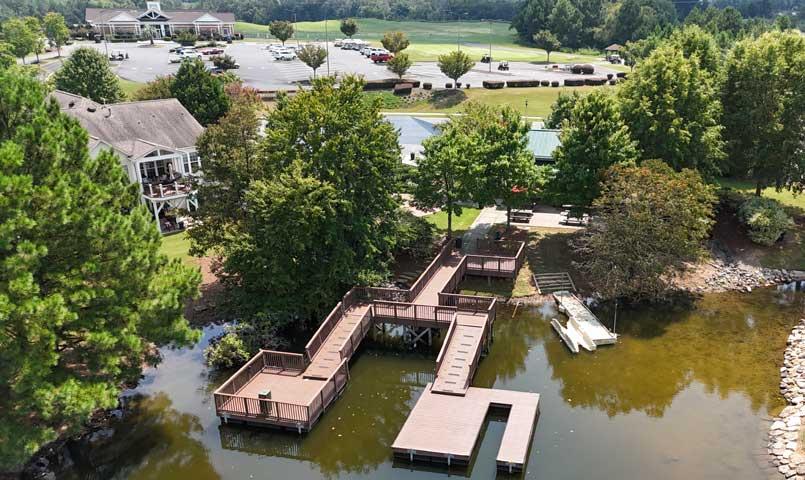
There's no universal winner—and that's actually an advantage for buyers.
Living on the North Carolina side generally puts you closer to Charlotte's urban core and many of its established suburbs, employment centers, healthcare facilities, and entertainment districts.
Cross into South Carolina, and buyers may find different housing options, tax considerations, community types, and lifestyle settings.
If you're retired or planning to retire, compare each state's treatment of retirement income and property taxes based on your individual financial situation. Working households should also consider commute patterns and the implications of living in one state while working in another.
The better question isn't necessarily "Which state is better?"
It's "Which side of Charlotte better fits the way I want to live?"
Lifestyle Communities Near Charlotte
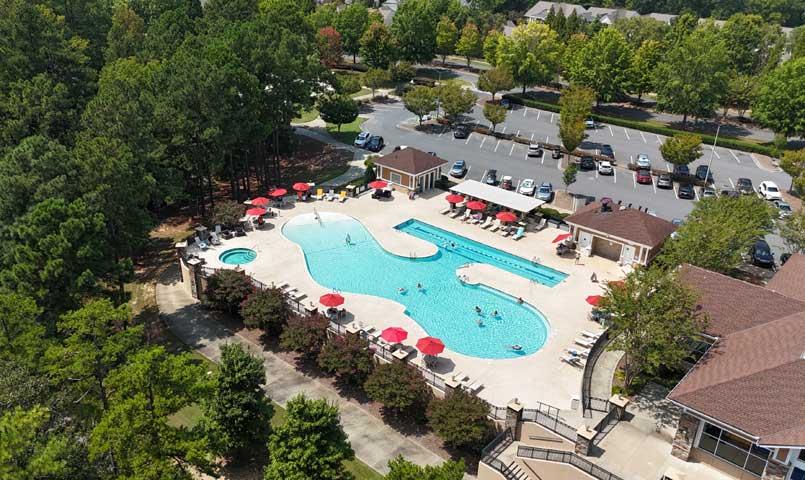
For buyers specifically interested in master-planned and lifestyle communities near Charlotte, the region offers a particularly diverse selection.
Rather than limiting your search to conventional neighborhoods, you'll find communities built around amenities and shared interests, including:
- 55+ and active adult communities
- Golf course communities
- Gated communities
- Lake and waterfront communities
- Master-planned developments
- New-home communities
- Pickleball and fitness-focused communities
- Communities with trails, pools, clubhouses, social activities, and other lifestyle amenities
And those options aren't confined to Charlotte itself.
They extend throughout the surrounding North Carolina and South Carolina region, allowing buyers to compare everything from lake living near Cornelius or Lake Wylie to suburban neighborhoods near Matthews and Indian Trail, golf communities, and active adult destinations farther from the urban core.
PrivateCommunities.com features dozens of lifestyle communities in and around the greater Charlotte region, making it easier to compare locations, amenities, homes, and community types in one place.
Pros and Cons of Living Near Charlotte
Pros
Strong economy: Charlotte provides access to one of the Southeast's major employment centers.
Excellent airport: CLT makes domestic and international travel exceptionally convenient.
Variety of places to live: Urban neighborhoods, suburbs, small towns, golf communities, lake communities, and 55+ developments are all available.
Outdoor recreation: Lake Norman, Lake Wylie, greenways, golf courses, parks, and proximity to the mountains provide plenty of options.
Mild winters: Buyers relocating from colder climates may appreciate Charlotte's comparatively moderate winter weather.
Things to Consider
Traffic: Charlotte's rapid growth has increased congestion, particularly along major commuter corridors.
Hot summers: July and August can be hot and humid.
Growth and construction: Some once-small suburbs are developing rapidly, which can change traffic, density, and local character.
Location matters: A community described as "near Charlotte" can easily be 30 miles or more from Uptown. Test-drive important routes before buying.
Two-state decisions: Taxes, insurance, commuting, and other costs can differ between North Carolina and South Carolina, so compare the complete picture rather than home prices alone.
Who Should Consider Living Near Charlotte?

The Charlotte region may be an especially good fit for:
Retirees and active adults who want mild winters, healthcare access, amenities, and plenty of community choices.
Remote and hybrid workers who don't need to commute into Uptown every day and can expand their search into outlying towns.
Golfers and outdoor enthusiasts attracted to the area's courses, lakes, parks, greenways, and proximity to the mountains.
Boaters and lake lovers who can choose between Lake Norman to the north and Lake Wylie to the southwest.
Relocating professionals who want access to Charlotte's job market without necessarily choosing an urban lifestyle.
Buyers leaving the Northeast or Midwest who want a warmer climate while retaining access to a major airport, healthcare, cultural attractions, and four distinct seasons.
Frequently Asked Questions About Living Near Charlotte
What are the best towns near Charlotte, NC?
Popular options include Matthews, Waxhaw, Indian Trail, Concord, Cornelius, and Gastonia in North Carolina, along with Lake Wylie and communities throughout Lancaster County in South Carolina. The best choice depends on commute, budget, desired amenities, and lifestyle.
Where should I live near Charlotte for lake access?
Cornelius and other Lake Norman communities north of Charlotte are popular choices. Lake Wylie and surrounding communities southwest of the city offer another major option, including locations on both sides of the NC-SC border.
Are there 55+ communities near Charlotte?
Yes. The greater Charlotte region includes numerous active adult and 55+ communities, including options in both North Carolina and South Carolina. Amenities vary but may include clubhouses, pools, fitness centers, pickleball, trails, golf, social clubs, and lawn-maintenance programs.
Can I live in South Carolina and still be close to Charlotte?
Absolutely. Charlotte sits close to the state line, and many people living in northern South Carolina remain connected to the Charlotte metro for employment, healthcare, shopping, air travel, and entertainment.
Is Charlotte a good place to retire?
Charlotte can be an attractive retirement destination for people seeking relatively mild winters, access to major healthcare and an international airport, abundant recreation, and a large selection of 55+ and lifestyle communities. Retirees who prefer less congestion may find surrounding towns particularly appealing.
Find Your Community Near Charlotte
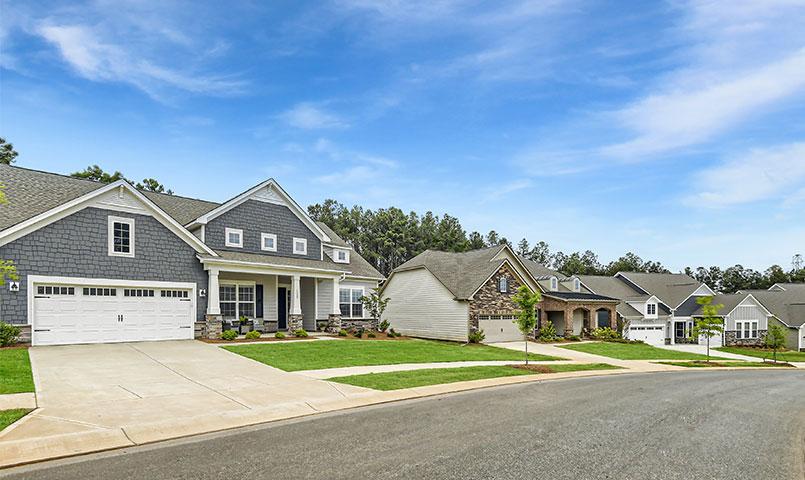
Charlotte may be the center of the region, but finding the right place to live here is often about looking beyond the city limits.
You might picture mornings on Lake Norman, a walkable neighborhood near Matthews, a golf community south of the city, a 55+ community in South Carolina, or a quieter home base in Waxhaw or Lancaster.
That's why PCR has spent decades helping lifestyle homebuyers explore communities based on how they actually want to live, not simply a ZIP code.
Browse the dozens of communities featured throughout the greater Charlotte region to compare locations, amenities, home styles, and lifestyle options—and find the community that feels right for your next chapter.
About the Author
With over 20 years of experience as a seasoned content creator, Robert Borges is the senior writer for Private Communities Registry (PCR), specializing in real estate trends and master-planned communities. He works closely with builders, developers, and real estate pros to create helpful content that guides homebuyers in finding the perfect community, ensuring they have the information needed to make confident, informed decisions.