by Robert Borges on November 13, 2026
Buying in a 55+ Neighborhood Within a Master-Planned Community: What to Know
Quick Answer
A 55+ neighborhood within a master-planned community is an age-restricted residential area that forms part of a larger development. The neighborhood may have its own amenities and association, while the surrounding community can include other age groups, shared recreation, shops, and services. Age requirements, amenity access, guest policies, and fees depend on the property and its governing documents.
You find a promising active adult neighborhood, then notice another name on the map: a larger master-planned community surrounding it. Does the 55+ designation apply to the whole development? Can you use every pool and fitness center? Will your neighbors all be around the same age?
The neighborhood and the master plan serve different roles. Understanding how they fit together can help you choose a home that offers both the social setting and the broader surroundings you want.
Understand the Neighborhood and the Master Plan Separately
Start with the address you are considering. Identify the named neighborhood, its age requirements, the association responsible for it, and the amenities attached to that ownership.
Next, look at the larger development. It may contain additional neighborhoods, public gathering places, commercial areas, trails, or separately operated clubs. Being inside the same master plan does not, by itself, establish access to every facility.
PCR's 55+ community directory includes different arrangements, from dedicated active adult developments to age-restricted neighborhoods within larger settings. Treat each community's structure as an individual question when building your shortlist.
Why This Arrangement Appeals to Some Buyers

An Active Adult Neighborhood With More Beyond Its Boundaries
Some buyers want a neighborhood oriented toward their stage of life while remaining close to a broader mix of activities and people. A 55+ enclave can provide a defined residential setting alongside the larger development's surroundings.
The appeal depends on your habits. If you want nearby dining, walking destinations, or opportunities to meet friends outside your neighborhood, investigate where those experiences would actually happen. A master-plan map is a starting point; a visit reveals the distances and connections.
More Ways to Shape Your Social Life
A neighborhood activity program can make it easier to meet people with similar interests. The larger development may offer additional events or gathering places, depending on its facilities and access rules.
Ask to see the neighborhood's own activity calendar and find out who can attend broader events. Consider whether you prefer small gatherings, large organized programs, or a mix. The number of amenities matters less than whether the opportunities suit you.
Options for Households at Different Life Stages to Live Nearby
When a master plan contains both age-restricted and all-ages neighborhoods, relatives may be able to explore separate homes in the same broader development. That possibility can appeal to buyers who want their own space while living closer to family.
Check the neighborhood rules and housing choices before planning around that arrangement. Separate homes in one development may still be a substantial drive apart, and shared access should never be assumed.
Four Details to Confirm Before You Buy

1. Which Age and Guest Policies Apply to This Home?
Request the current written occupancy rules for the neighborhood. Ask how they apply to all intended residents, visiting family, extended stays, and any future change in household circumstances.
Also ask about guest access to pools, fitness spaces, and organized activities. A residential age policy and an amenity guest policy answer different questions. If grandchildren visiting is central to your plans, discuss that scenario rather than relying on a general statement that guests are welcome.
2. Which Amenities Are Private, Shared, or Separately Operated?
Make a short list of your priorities, then ask about each facility individually. Establish who owns or operates it, who can use it, and what is included with your home.
This is particularly useful for golf courses, dining venues, recreation centers, and resort activities. A facility can be close to your house and still require a separate membership, reservation, ticket, or usage fee.
Visit the spaces at the times you would use them. Ask about court reservations, class registration, guest limits, and seasonal hours. These details help you understand the experience behind the amenity list.
3. What Is Open Now, and What Is Planned?
In a developing community, distinguish completed neighborhood amenities from facilities still on the plan. Do the same for the broader development. One set of amenities may be operating while another is awaiting construction.
If a feature is essential, ask about its current status, anticipated delivery, and any interim arrangements. Evaluate whether the community would still fit your needs if that feature opened later than expected.
4. Which Organization Handles Each Responsibility?
Ask for an explanation of neighborhood association duties, any master association, and any separate club or district charges affecting the property. Review what each payment covers and which services remain your responsibility.
The same clarity helps with maintenance questions. Find out who you would contact about landscaping, a shared trail, a neighborhood pool, or a billing issue. Understanding those roles before purchase makes the arrangement easier to evaluate.
Communities Worth Exploring
Del Webb Tradition - Port St. Lucie, Florida

Del Webb Tradition is a 55+ neighborhood within the larger Tradition master-planned community. Single-family homes and attached villas are complemented by neighborhood recreation and an organized lifestyle program.
The builder's community information describes fitness facilities, swimming, racquet sports, and a lifestyle director. Buyers can use it as an example of a defined active adult neighborhood within a broader destination, while confirming arrangements for the home they are considering.
Esplanade at Pinewalk - St. Johns, Florida
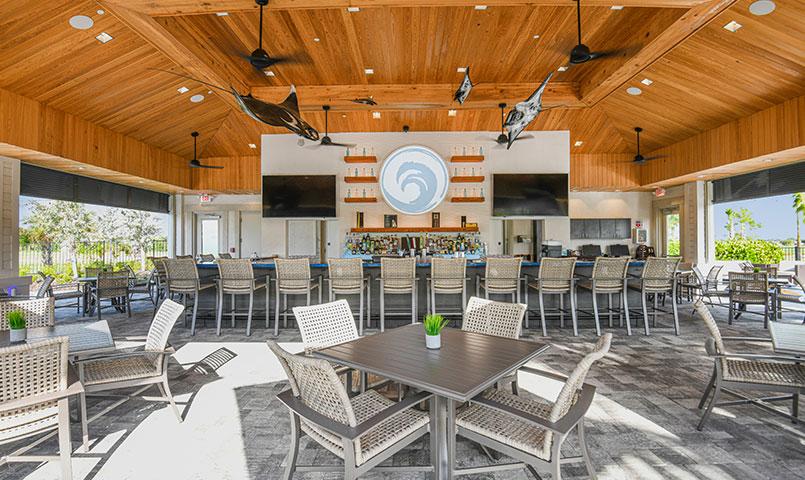
Esplanade at Pinewalk illustrates why age designations and amenity arrangements need separate attention. Taylor Morrison identifies Esplanade as the 55+ offering and Laurelwood at Esplanade at Pinewalk as an all-ages neighborhood within Pinewalk.
The builder's Pinewalk overview describes planned amenities and indicates that Laurelwood homeowners will have access to planned Esplanade resort amenities. Ask which spaces and programs are shared rather than interpreting the 55+ residential designation as a promise that every amenity user will be 55 or older. The development is coming soon, with opening anticipated in mid-2027.
BluestonePeak at Massanutten Mountain - Massanutten, Virginia

A related arrangement is an active adult neighborhood within a larger resort setting. BluestonePeak at Massanutten Mountain is a 55+ community under development within Massanutten Resort in Virginia's Shenandoah Valley.
Its community overview distinguishes planned private neighborhood facilities from shared resort offerings. The developer also notes that certain uses outside the owners association's property or hours may involve additional fees. For mountain buyers, it is a reminder to evaluate neighborhood ownership, resort access, and activity costs separately.
Is a 55+ Enclave the Right Fit for You?
This arrangement may be worth exploring if you want an active adult residential setting with a larger community or recreation destination nearby. It can also appeal if you like having a neighborhood gathering place while keeping other social and recreational options within reach.
Consider your preferences for shared spaces carefully. If an exclusively adult amenity environment is important, ask specific questions about access. If proximity to family is the attraction, compare home locations and everyday routes. If simplicity is your priority, make sure you understand the management and fee structure.
During a visit, imagine an ordinary week: exercising, meeting a friend, running errands, and hosting guests. That exercise will tell you more about the fit than the size of the development alone.
Frequently Asked Questions
Is the entire master-planned community 55+?
Not necessarily. A dedicated 55+ neighborhood can sit within a larger development containing all-ages neighborhoods. Confirm the designation and written rules for the property.
Can 55+ residents use all the amenities in the master plan?
Access depends on the community's arrangements. Some facilities may be shared, while others require separate membership or payment. Request written details for the amenities you expect to use.
Does a 55+ neighborhood mean its amenities are adults-only?
That should not be assumed. Occupancy rules, amenity membership, and guest policies are separate matters. Ask who may use each facility and whether particular hours or programs have age restrictions.
Do these communities offer assisted living?
Do not assume that an active adult designation includes personal care or medical services. If those services are needed, ask what is actually provided and evaluate suitable housing and care options separately.
Explore Active Adult Living With PCR

PCR has helped homebuyers discover lifestyle communities for the past 30 years. Explore 55+ communities, compare the neighborhoods and settings that interest you, and request current information through their showcases. Understanding how your home fits within the larger community helps you choose both an address and a lifestyle.
About the Author
With over 20 years of experience as a seasoned content creator, Robert Borges is the senior writer for Private Communities Registry (PCR), specializing in real estate trends and master-planned communities. He works closely with builders, developers, and real estate pros to create helpful content that guides homebuyers in finding the perfect community, ensuring they have the information needed to make confident, informed decisions.